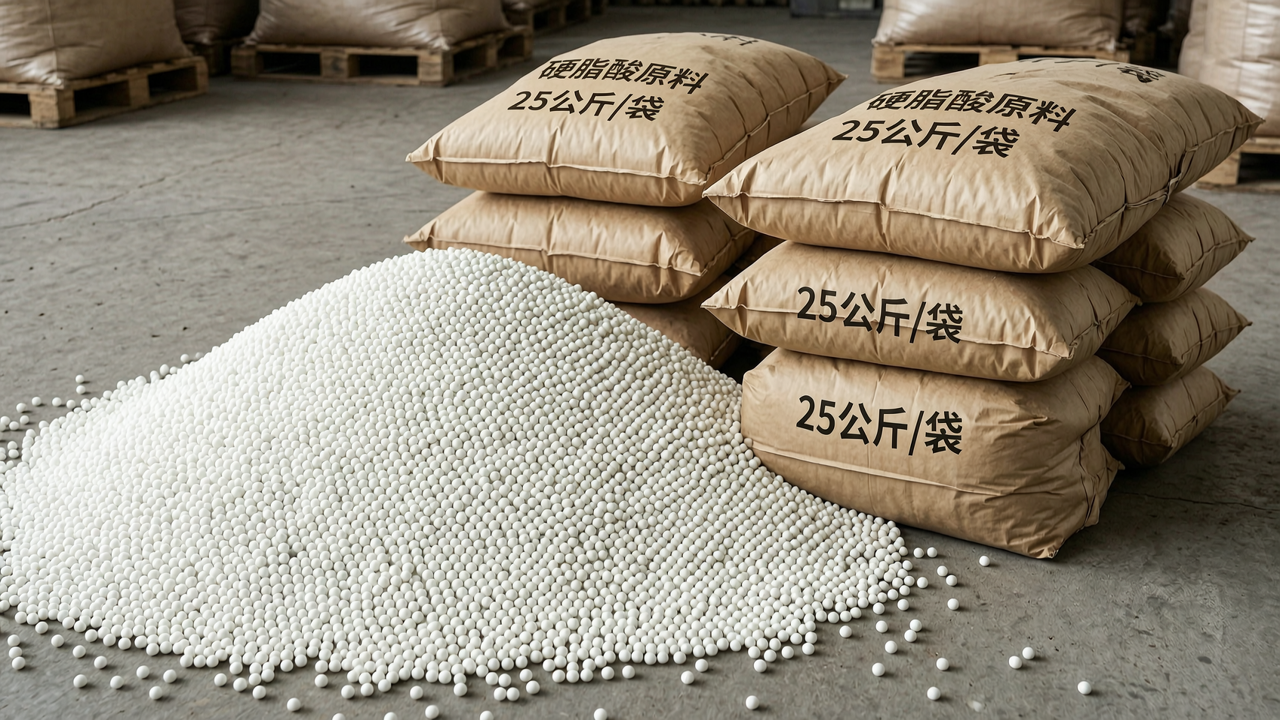
Stearic acid occupies a unique niche in asphalt modification due to its low cost and simple processing. As an efficient surfactant and lubricant, it significantly reduces the viscosity and softening point of asphalt systems, improving rheological behavior at low temperatures and workability during construction. In coal tar binder modification, stearic acid is chemically bonded with methyl groups to reduce interfacial energy, enhancing asphalt's ability to wet and coat carbonaceous aggregates. In road asphalt and waterproof membrane modification, it acts as a synergist or dispersing aid, used in combination with materials like SBS, SBR, and nano-silica to prevent agglomeration of inorganic fillers. This improves dispersion uniformity and compatibility within the asphalt matrix, optimizing high- and low-temperature performance and water stability of the mixture.
However, stearic acid's modification effects are not universal; its application has clear boundaries and limitations. First, while stearic acid reduces asphalt viscosity, it often significantly lowers the coking value. This is a critical flaw for specialty asphalts like carbon anodes that require strict residual carbon content limits, restricting its use in high-temperature pyrolysis scenarios. Second, as a small organic molecule, stearic acid offers limited improvement to asphalt's high-temperature stability. Excessive addition may even weaken resistance to rutting under heavy loads, failing to meet the stringent requirements of roads for heavy traffic. Additionally, stearic acid bonds with asphalt primarily through physical adsorption or weak chemical interactions. Over time, this poses risks of migration and exudation, potentially leading to diminished modification effects and premature pavement degradation. Therefore, in practical engineering applications, it is essential to carefully balance stearic acid's rheological benefits against its shortcomings in thermal stability and durability based on specific operating conditions. Strategies such as composite modification and controlled dosage must be employed to maximize advantages and minimize drawbacks, achieving a balance between cost-effectiveness and high performance.
Guizhou Transportation 26-7-25